A Shopify store is more than just a collection of products and a checkout button. A successful ecommerce store needs a strong visual system, fast performance, intuitive navigation, mobile-first design,…
Quick answer
What Does a Shopify Developer Do?
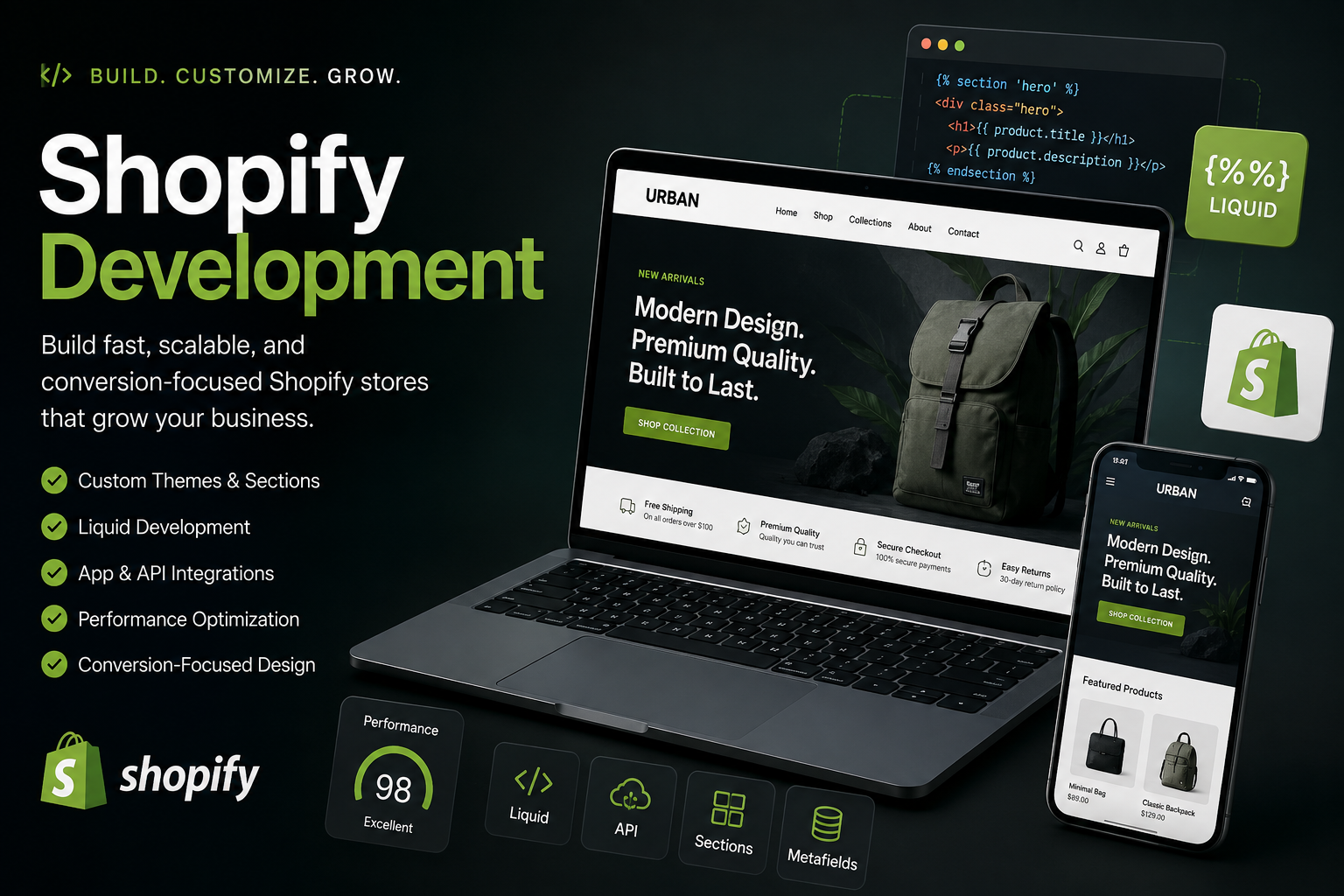
A Shopify developer designs, customizes, and develops Shopify stores using Liquid, JavaScript, HTML, CSS, Shopify APIs, metafields, and custom theme sections. A professional Shopify developer can build custom storefronts, improve performance, integrate third-party tools, and create a better shopping experience focused on usability and conversions.
What Is Shopify Development?
Shopify development is the process of designing, customizing, and improving an online store built with Shopify. It goes beyond changing colors, fonts, or images. Professional Shopify development can include custom theme development, Liquid programming, custom sections, product page improvements, metafields, app integrations, API connections, performance optimization, and responsive user experiences. The goal is to create a Shopify store that is visually consistent, easy to manage, fast to load, and designed around the needs of the business and its customers.
Why Does a Business Need a Shopify Developer?
Shopify provides powerful tools for launching an ecommerce store, but businesses often need functionality that cannot be achieved with standard theme settings alone. A Shopify developer can create custom solutions for unique business requirements. For example, a store may need custom product sections, advanced filtering, product comparison, custom landing pages, dynamic content, subscription functionality, upselling features, or third-party API integrations. Instead of changing the entire business process to fit a theme, custom development allows the storefront to be built around the business requirements.
What Can a Shopify Developer Build?
These features can be developed as reusable components so that store owners can manage their content through the Shopify admin without depending on a developer for every small update.
Shopify Liquid Development
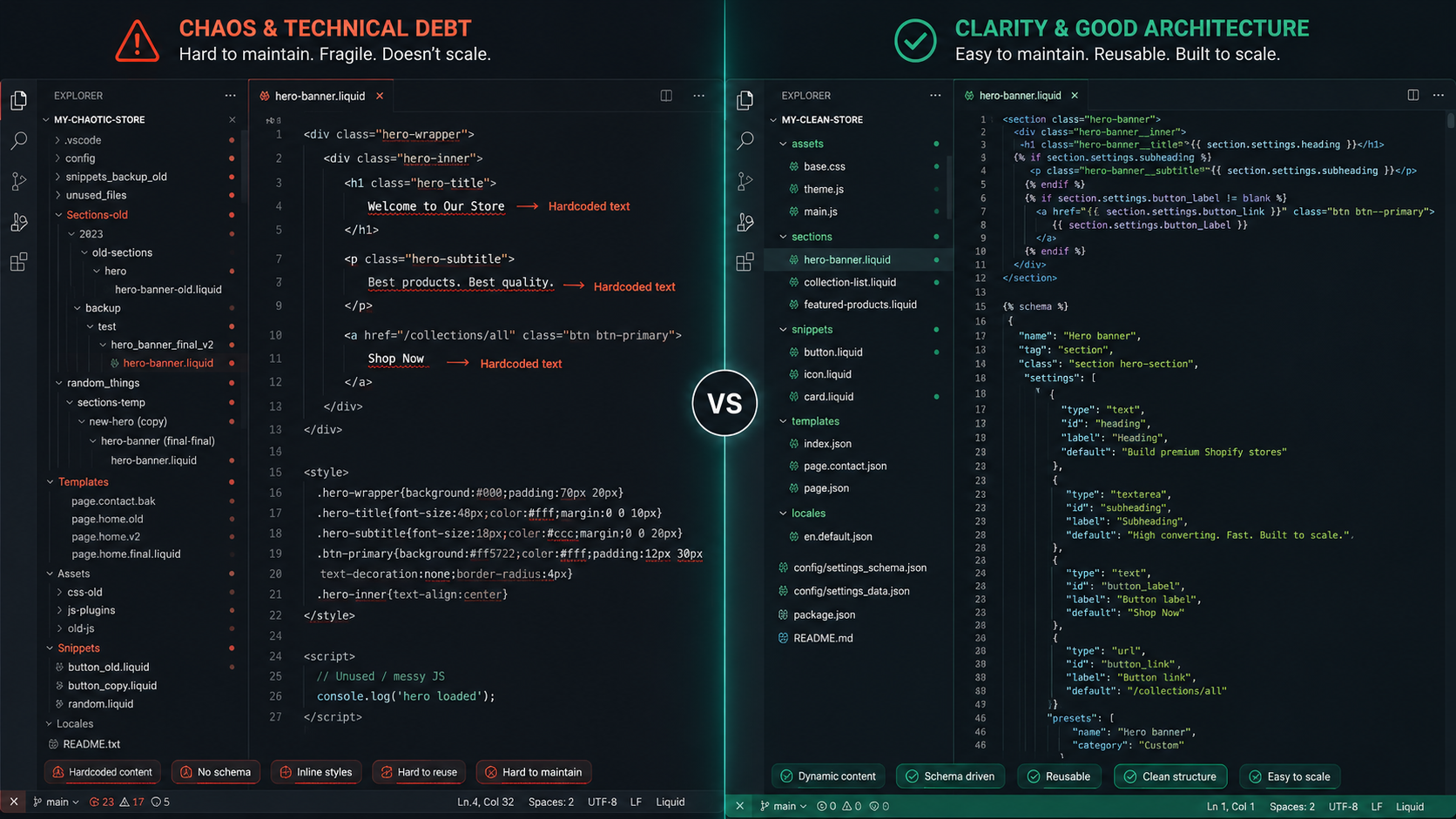
Liquid is one of the core technologies used in Shopify theme development. It allows developers to dynamically display products, collections, variants, metafields, customer information, and other Shopify data. For example, a custom product template can dynamically display the product title, price, images, variants, and additional metafield information. Using Liquid properly allows developers to create flexible and reusable Shopify sections instead of hardcoding the same content throughout the store.
Custom Shopify Theme Development
A Shopify theme controls the structure, design, and user experience of a storefront. A custom Shopify theme can be developed around a brand's specific requirements rather than forcing the business to work within the limitations of a pre-built design. Custom theme development can include:
Shopify Performance Optimization
Store performance is an important part of the ecommerce experience. Large images, unnecessary JavaScript, excessive third-party apps, inefficient theme code, and poorly optimized assets can make a Shopify store slower. A Shopify developer can improve performance by optimizing images, CSS, JavaScript, Liquid rendering, fonts, third-party scripts, and theme structure. The objective is to create a faster storefront that provides a smoother experience across desktop and mobile devices.
Mobile-First Shopify Development
A Shopify store needs to work well on mobile devices because customers can access an ecommerce website from many different screen sizes. A mobile-friendly Shopify store should have clear navigation, readable typography, accessible buttons, optimized product galleries, responsive layouts, and a simple purchasing experience. Mobile-first development ensures that important content and functionality remain easy to use regardless of the customer's device.
Shopify Metafields and Dynamic Content
Metafields allow Shopify stores to store additional structured information that is not included in the standard product fields. Businesses can use metafields for specifications, ingredients, materials, care instructions, technical information, brand details, and other custom product data. Developers can then connect these metafields to custom theme sections and display the information dynamically. This approach is especially useful for stores with large product catalogs because content can be managed from the Shopify admin instead of being hardcoded into the theme.
Shopify App and API Integration
Shopify has a large ecosystem of apps and external services. A developer can integrate tools for reviews, subscriptions, email marketing, analytics, search, filtering, upselling, inventory management, customer support, and other ecommerce requirements. Custom API integrations can also connect Shopify with external platforms and business systems. The important part is selecting and implementing integrations carefully so they provide the required functionality without unnecessarily increasing the complexity or performance cost of the storefront.
Conversion-Focused Shopify Development
A successful Shopify store should not only look professional. It should also make it easy for customers to understand products and complete their purchases. Conversion-focused development can include clear calls to action, product benefits, trust signals, reviews, FAQs, shipping information, sticky add-to-cart functionality, upsells, cross-sells, and simplified mobile interactions. Every section should have a purpose and contribute to a better customer journey.
Shopify Theme Customization vs Custom Development
Theme customization and custom theme development are two different approaches. Theme customization is suitable when an existing Shopify theme already provides most of the required functionality and only specific design or feature changes are needed. Custom development is more suitable when a business needs a unique storefront, advanced functionality, greater control over the user experience, or a more scalable theme architecture. The right approach depends on the store's requirements, budget, timeline, and long-term goals.
How the Shopify Development Process Works
A professional Shopify development project usually follows a structured process.
Common Shopify Development Mistakes
Some common problems can reduce the performance and maintainability of a Shopify store. Using too many apps can add unnecessary scripts and complexity. Hardcoding content can make simple updates dependent on a developer. Ignoring mobile UX can create problems for customers using smartphones. Large and unoptimized images can increase page loading time. Poorly structured Liquid, CSS, and JavaScript can make future development difficult. A professional Shopify development approach considers performance, usability, scalability, and maintainability from the beginning.
When Should You Hire a Shopify Developer?
You may need a Shopify developer when your store requires custom functionality that cannot be achieved through standard Shopify settings. A developer can help when you need:
A Shopify store is more than just a collection of products and a checkout button. A successful ecommerce store needs a strong visual system, fast performance, intuitive navigation, mobile-first design, and a seamless buying experience.
This is where professional Shopify development makes a major difference.
Whether you are launching a new Shopify store, redesigning an existing storefront, or improving a custom Shopify theme, the right development approach can help create a store that is easier to manage, faster to load, and better optimized for conversions.
In this guide, we’ll look at what Shopify development involves, when you need custom development, and how a professional Shopify developer can improve an ecommerce website.
tools & technologies
Tools used for this approach
conclusion
The takeaway
Shopify provides a strong foundation for ecommerce, but the right development approach can take a store much further. Custom Shopify development can improve the storefront's design, performance, usability, scalability, and overall customer experience. From Liquid theme development and custom sections to metafields, integrations, performance optimization, and conversion-focused UX, every part of the store can be developed around the business requirements. A well-built Shopify store should not only look professional today. It should also be easy to manage and ready to grow with the business.
next step
Need a Custom Shopify Store?
Let's build a fast, scalable, and conversion-focused Shopify experience around your business goals.
Start a Project